Someone who wants world-class care abroad hits five walls at once. ANDO owns all five: vetted supply, capped quotes held in escrow, records that actually travel, coordination on the ground,
and aftercare that follows them home. Seven categories. One rail underneath.
Better care3 of the world's top 10cancer hospitals, in one city
Better price30-60% of the US billcapped before you fly, held in escrow
FasterDays, not monthswhile the US median wait from diagnosis to first treatment is 44 days and rising (JNCI, 2025)
The problem
Demand isn't missing. The rail is.
Korea treated 2.01 million foreign patients in 2025, but dermatology alone is 62.9% of it, and plastic surgery another 11.2%. High-acuity care is close to zero, not because patients don't want it, but because
five frictions stop them before they book.
01They can't verify the hospitalRankings, licences, surgeon volumes, complication policy. None of it is legible from abroad.
02Records don't movePathology slides, DICOM imaging, translated summaries. Hospitals reject half-files; patients give up in the gathering.
03Payment is unsafeWire money across a border to a stranger, then hope the quote holds. No cap, no custody, no recourse.
04Logistics are a second jobVisa, interpreter, scheduling around a treatment window, a companion's flights, recovery accommodation.
05Nobody owns the returnThe flight home ends the relationship. Follow-up, records handoff, complications. All orphaned.
Every competitor owns a slice: lead generation, or a hospital brand, or a booking desk.
Owning the whole path is what makes the frictions disappear, and what makes the data compound.
Entry depends on why you are coming
Oncology & complex casesStart with a written second opinion. Is Korea even your answer?
CheckupStart with a date. Age- and sex-specific panel, booked.
Dental · Vision · Rhinitis · BeautyStart with a quote. Photos or records in, capped price out.
All three converge on the same rail ↓
01 Records
Assembled & translated
Requested in your name, chased, digitised, packaged to hospital standard.
02 Supply
Vetted, named
Licence, board certification, case volume, complication and revision terms, in writing.
03 Money
Capped & escrowed
One itemised number agreed before travel, released against milestones.
Records home in English, scheduled remote follow-up, local handoff.
Seven categories
Different entries. Same rail underneath.
Each category has its own economics, its own evidence base, and its own patient. What they
share is the infrastructure. Which is the asset.
Oncology
The identity anchor. Three of the world's top ten cancer hospitals sit in one city.
Wedge
Second Opinion
The low-friction paid entry into oncology and complex cases, at the hospital's published fee. No competitor occupies it. It is a wedge in the go-to-market sense, not a step every patient takes.
Checkup
The volume entry. Age- and sex-specific panels built from US guideline grades, delivered in one day.
Dental
Cash engine. Implant and full-arch work at a fraction of US pricing. Dental clinics grew faster
than any other kind of institution in 2025.
Vision
Low-stakes volume. Devices reach Korean patients years before they reach American ones. The
CentraFLOW lens design
behind today's EVO ICL cleared in Korea in 2013, nine years before the
FDA cleared EVO,
and at roughly half the price.
Rhinitis
Attach and niche surgical. Lowest revision rates of nasal procedures, same-week consult to OR.
Beauty
The category that already travels. We compete on vetting and disclosure, not on price.
Why now
Two shifts, both structural.
Korea is opening the front door
Korea's medical-overseas-expansion law was amended in 2026 to permit non-face-to-face first
consultations and prescriptions for foreign patients. It takes effect around 2027. It is not in
force yet. We are building for the day it is: when it lands, a remote paid second opinion becomes a
compliant product rather than a grey one, and it is a structural advantage Western competitors cannot
replicate, because it is a Korean regulatory position.
US cash-pay is expanding in real time
Enhanced ACA subsidies expired at the end of 2025. Premiums rose and the uninsured and
high-deductible cash-pay segment is growing: the exact population for whom a capped, escrowed,
posted-price alternative is rational rather than exotic.
2.01M
Foreign patients, Korea 2025, the first year above two million
MOHW, 2025. High-acuity care is the white space, not the crowd
+128.9%
Growth in foreign patients at dental clinics in 2025, against +79.0% for dentistry overall
MOHW, April 2026. Clinic-grade supply is outgrowing the category
Every figure on this page links to its published source, and those links are meant to be
clicked. We publish no patient testimonials and no before/after imagery, Korean Medical Service Act, Article 56.
Business model
One patient compounds three ways.
Korean government notice sets a ceiling on what any facilitator may charge: no more
than 15% at tertiary hospitals, 20% at general hospitals, 30% at clinics. It is a legal maximum, not a fee
we collect, and it is public. That is precisely why the model cannot rest on transaction margin alone.
Layer 01. Now
Transaction
Service fee billed after consultation, plus escrow and capped-quote handling on the payment rail.
Second opinion, flat fee
Treatment coordination, capped bundle
Escrow custody & milestone release
Layer 02, Next
Recurring
The same patient, over years. Cancer is surveillance for a decade; screening is annual by design.
Annual screening membership
Cross-border aftercare subscription
Family expansion, hereditary risk
Layer 03, Endgame
Trajectory
The decision, what was done, and what happened after the flight home, connected as one
consented record. Hospitals lose the patient at the airport, so nobody else holds both ends.
The patient does not pay for this layer; hospitals and pharmaceutical sponsors do.
Outcome reporting back to partner hospitals
Clinical-trial matching
Longitudinal oncology evidence, licensed and never sold outright
Why we win
The discipline is the moat.
The category is full of lead generators. Anyone can list hospitals. What almost nobody does
is tell a patient what not to buy: and that turns out to be the only durable differentiator with an
educated, sceptical, cash-paying American.
We publish the grade, not the item count
Our screening panels carry US Preventive Services Task Force grades on every line. Where Korea's
standard practice goes beyond the evidence, we mark it as beyond the evidence rather than bundling it
silently. We leave thyroid ultrasound out of the default panel and explain the overdiagnosis data:
adding it to routine screening raised Korean diagnoses fifteen fold between 1993 and 2011 while the
death rate stayed flat
(Ahn, Kim & Welch, NEJM, 2014).
We say "don't fly for this"
Our eighties panel recommends less screening, because guidelines stop most cancer screening
when life expectancy is under ten years. A facilitator paid on volume cannot say that. It is the single
clearest proof that our incentive sits with the patient.
Supply is vetted in person, in writing
Board certification, named-surgeon guarantee, anaesthesia arrangement, revision and complication
terms, agreed before payment. Korea is the first country to legally require CCTV in operating rooms
where the patient is under general anaesthesia
(Medical Service Act amendment, in force 25 September 2023),
and we make partners' compliance a selection criterion.
Compliance across two jurisdictions, built once
Cross-border care means navigating medical advertising law, cross-border health-data transfer,
records custody, escrow, visa status and consumer protection across two jurisdictions at once. Building
that once, correctly, is what a lead-generation competitor structurally cannot copy.
Team & status
Built by someone who has done this corridor before.
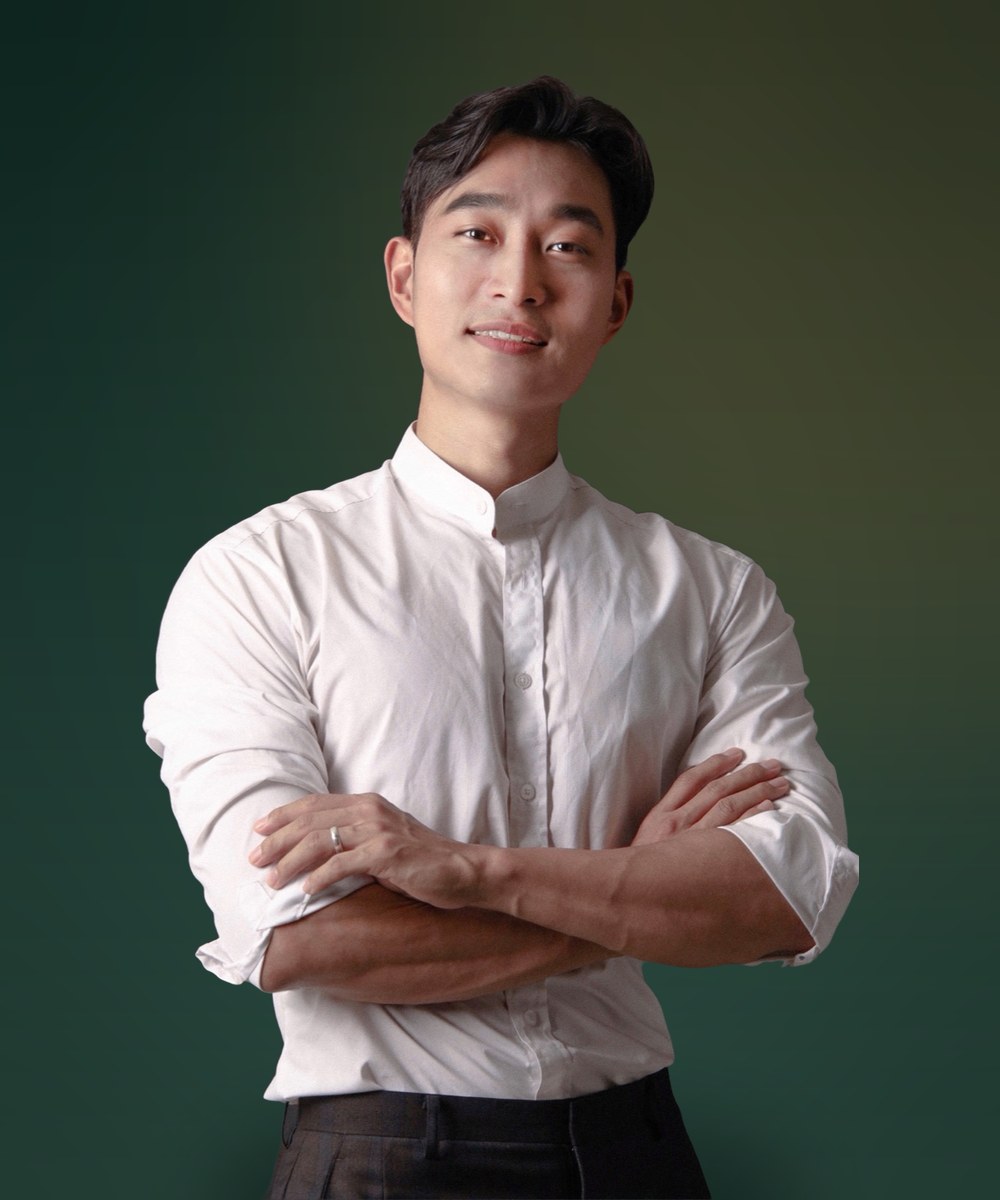
Soohan (Jazz) YunFounder & CEO · Seoul
Soohan (Jazz) Yun. Founder & CEO. He has shipped a regulated healthcare
product with a top-tier Korean insurer, and he spent years in uniform at the one institution built to
make American and Korean systems work as one. This corridor is not a new idea to him.
Clinical direction is advised by a senior Korean oncologist at a leading Seoul cancer centre, an
existing relationship rather than cold outreach. Partner and advisor names are shared under NDA.
Actively recruiting a technical co-founder, but only someone who fundamentally changes the
trajectory. The first twelve months are supply lock-in, corridor operations and trust.
Built
Korea's first AI cancer insurance
Underwritten with Hanwha Life, one of the country's three largest life
insurers. Taken from first meeting to launch as Head of Business at Need.
Served
US Air Force Staff Sergeant
At the tri-command headquarters in Korea: UNC · USFK · ROK/US CFC. The
same US↔Korea problem, in a different uniform.
Operated & studied
ATOMS Korea & APAC
The venture founded by Uber's former CEO Travis Kalanick, built from zero.
University of California, Berkeley.
Where we actually are
BuiltSeven-category evidence base compiled and sourced; 47 tertiary hospitals mapped with their international-patient organisations; the patient-facing site live across all seven categories.
NowSupply lock-in at elite centres, priority access and published-fee pathways, before anything else scales.
NextOne corridor, end to end: cases run start to finish on the full rail: records, escrow, treatment, aftercare.
AskPartner centres, benefits channels, and investors who want the corridor built correctly the first time.
The corridor is being built now.
If you want it built correctly the first time, we would like to hear from you. The fastest way to judge us is not this page. It is the product.