Treated in Seoul.
Cared for back in the US.

Two things have to go right, and this industry only sells you the first. The treatment has to be the right one, at a hospital we have stood inside, for a price agreed before you fly. Then none of it can vanish when you land, because the doctor who takes over back in the US has to be able to read what happened in Seoul.

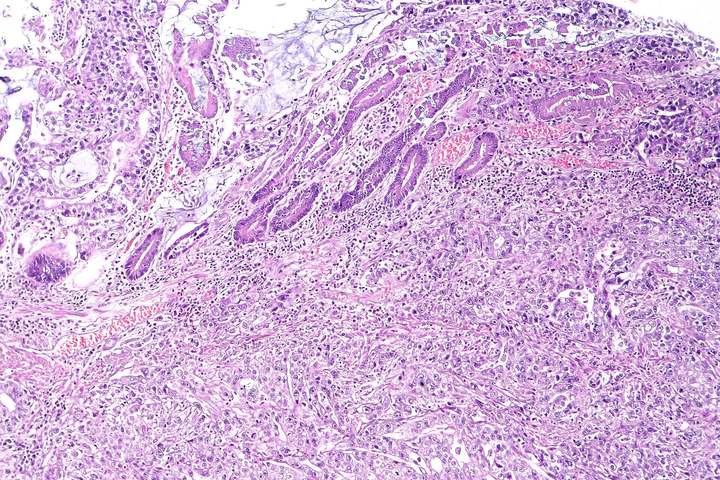
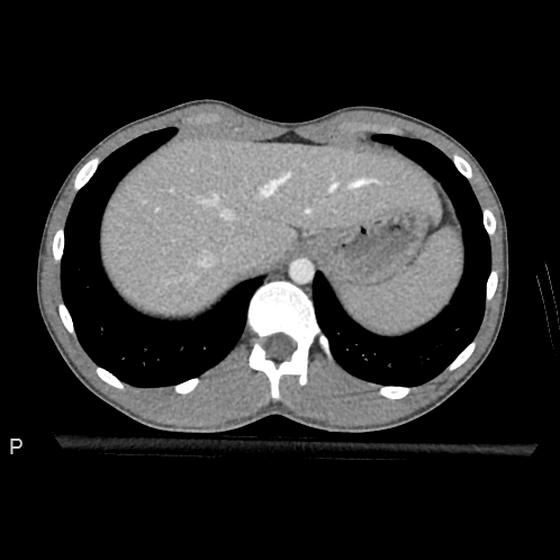
Imaging above is open-licensed reference material, not a patient of ours. CT: Mikael Häggström, MD (CC0). Histology: CoRus13 (CC BY-SA 4.0).

01 In Seoul We run the whole treatment
  • Licence, surgeon case volume and written complication terms checked before a name reaches you
  • One price agreed before you fly, 30 to 60% of the US bill, held in escrow until the work is done
  • One team on the ground, and a named person accountable if something goes wrong
02 When you land Your record follows you home
  • Scans, pathology and treatment notes rebuilt in the form a US doctor reads, not a translated Korean form
  • Sent to your own doctor directly, instead of a disc handed to you at discharge
  • Follow-up at three, six and twelve months, with a route back to the team that treated you
01 Why Korea

Better hospitals,
not just cheaper ones.

Most people assume treatment abroad means trading quality for cost. That is a fair assumption in most of the world. It is the wrong assumption about Korea, and the ranking data is public.

#3 · #4 · #8Seoul hospitals in the global oncology top 10Newsweek & Statista, World's Best Specialized Hospitals 2026
2.01MForeign patients treated in Korea in 2025, the first year above two millionMinistry of Health & Welfare, April 2026
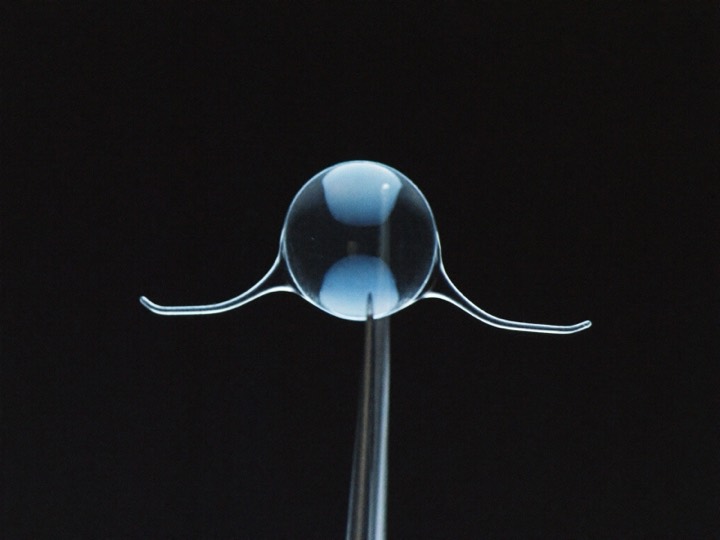
2013 → 2022The CentraFLOW lens design behind today's EVO ICL cleared in Korea nine years before the FDA cleared EVOSTAAR Surgical, 2013 · FDA P030016/S035, 25 March 2022
Firstcountry to legally require CCTV in operating rooms where the patient is under general anaesthesiaMedical Service Act amendment, in force 25 September 2023

Every figure on this page links to its published source, and those links are meant to be clicked. We publish no patient testimonials and no before and after imagery, in line with the Korean Medical Service Act, Article 56.

02 Why us

Anyone can list a hospital.
We tell you what to skip.

This category is full of directories that are paid by the clinic they send you to. The clearest way to show you we are not one of them is not a promise. It is the things we refuse to sell you.

We publish the grade

Every line of a screening panel carries its evidence grade.

Our checkup panels are built from US Preventive Services Task Force grades, and each item shows its grade to you. Where Korean standard practice goes beyond the evidence, we mark it as beyond the evidence instead of quietly bundling it in.

Thyroid ultrasound is not in our default panel. Korea's own experience is why. Adding it to routine screening raised diagnoses fifteen fold between 1993 and 2011 while the death rate stayed flat. Ahn, Kim & Welch, New England Journal of Medicine, 2014
We say don't fly for this

Our panel for people in their eighties recommends less screening, not more.

Guidelines stop most cancer screening once life expectancy falls under about ten years, because the harms overtake the benefit. So that is what our panel does, even though the longer panel pays better.

A facilitator paid on volume cannot write that sentence. It is the plainest test of whose side the incentive is on.
We check in person

Board certification, the named surgeon, and what happens if it goes wrong.

Licence, board certification, case volume, who is actually holding the instrument, the anaesthesia arrangement, and the revision and complication terms. Agreed in writing before you pay anything.

Operating room CCTV compliance is one of our selection criteria, not a footnote.
03 Why people come

The seven kinds of care
people need most.

These seven are where the need is highest and where Korean hospitals are strongest. Each has its own evidence, its own pricing and its own kind of patient. What does not change is everything around the treatment. Open the one that is yours.

04 How it works

How it works, step by step.

Where you start depends on why you are coming. A second opinion is the right first step for cancer and complex cases. It is not the right first step for a nose or a set of implants.

Three ways in
Cancer or a complex caseStart with a written second opinion. The first question is whether Korea is even your answer.
A checkupStart with a date. We build the panel around your age and sex and book the day.
Dental · Vision · Rhinitis · BeautyStart with a quote. Send records or photos, get a capped price back.
All three then run on the same five steps ↓
Step 01
Records, assembled and translated
Requested in your name, chased, digitised and packaged to hospital standard.
Step 02
A named hospital and a named surgeon
With their licence, case volume and written complication terms attached.
Step 03
One price, capped and escrowed
An itemised number agreed before travel, held and released against milestones.
Step 04
Someone with you in Seoul
Interpreter, scheduling, a companion's logistics and clearance to fly home.
Step 05
Aftercare that follows you home
Your records sent home in English, scheduled remote follow-ups, and a handoff to your own doctor.
05 Money and safety

The price is agreed before you fly.

The reason cross-border care feels dangerous is rarely the medicine. It is wiring money across a border to a stranger and hoping the number holds. That is the part we rebuilt.

Capped

One itemised number, agreed in advance

Not a starting price and not an estimate. If the plan changes on the ground, the change comes back to you for approval before anything is charged.

Escrowed

Your money is not handed over on arrival

It is held and released against milestones as they are actually completed, so nobody is paid in full for work that has not happened.

Capped by law

There is a legal ceiling on what any facilitator can charge

Korean government notice sets it at no more than 15% at tertiary hospitals, 20% at general hospitals and 30% at clinics. It is public, and it binds the facilitation on every case we coordinate.

What we are, plainly. ANDO is not a medical provider, and ANDO does not itself hold Korean patient-facilitator registration. Patient facilitation and on-the-ground operations inside Korea are carried out by a partner registered with the Ministry of Health and Welfare. All care is delivered at licensed medical institutions in Seoul that are registered with the Ministry of Health and Welfare to treat international patients. We do not guarantee outcomes, and we publish no patient testimonials and no before and after imagery, in line with the Korean Medical Service Act, Article 56. Any clinical decision is made by your treating doctor, not by us.